
The “Bunkerjongen”
Thousands of young Luxembourgers refused to serve in the Wehrmacht. In the Kiischpelt many of them survived hidden in forest bunkers, supplied by courageous helpers.
The background
When the Commander-in-Chief of the Army, Walther von Brauchitsch, promised after 10 May 1940 to respect Luxembourg’s independence, the Luxembourg population initially remained passive, wait-and-see and sceptical. With the appointment of Gustav Simon as head of the civil administration, however, their attitude changed fundamentally. Simon’s goal: a voluntary and explicit commitment by the population to Germanness. The language decree made it clear that Luxembourg’s distinct identity was no longer being respected, and it sparked the first protests. Family names, street names and symbols of independence were Germanised or abolished. From early 1942 the Gauleiter launched a large-scale campaign for voluntary enlistment in the Wehrmacht.
The Resistance
The first activities of the resistance groups consisted of opposing the Germans with Luxembourgish propaganda (whispering campaigns, leaflets, distribution of photos and badges, destruction of Nazi posters). Probably the most important secret printing press was in the cemetery of Rumelange, where thousands of leaflets were printed in an empty burial vault.
These leaflets were meant to inform the Luxembourg population about the census of 10 October 1941. With this census, the Gauleiter wanted to force an official commitment to Germanness: the three questions on nationality, mother tongue and ethnicity were to be answered with “German”. The count showed that the Luxembourgers had followed the Resistance’s call and declared their Luxembourg identity by answering “lëtzebuergesch” three times. The Nazis’ reaction came swiftly: the death penalty was imposed on all resistance fighters. More than 300 people were arrested and interned in the Hinzert special camp.
The biggest action of the Luxembourg Resistance was the general strike of 1942. On 30 August 1942 Simon announced the introduction of compulsory military service in Luxembourg, known as “forced conscription”. The strike began on 31 August 1942 in Wiltz and spread to Diekirch and Ettelbruck in the course of the morning. At the Schifflange steelworks too, 2,000 workers downed tools. By 2 September 1942 more and more strikers had joined in: pupils from the secondary schools in Esch and Echternach and trainee primary school teachers took part, and farmers poured away their milk … Simon could only bring the situation under control with the most brutal terror. A state of siege was declared, and 21 people were sentenced to death and shot immediately. Even the Allied press abroad reported on the Luxembourg general strike.
The immediate conscription of the 1920‒1924 age groups into the Wehrmacht could not be prevented, however. Further men were called up on 25 March 1943 (born 1925), 8 December 1943 (born 1926) and 14 July 1944 (born 1927).

The National Strike Monument in Wiltz
Of these 11,168 forced conscripts, 3,510 were draft resisters or deserters.
• Forced conscripts: 11,168
• Deserters or réfractaires (draft resisters): 3,510
• Missing: 1,084
• Died: 1,764 (including 1,378 killed in action and 163 executed)
• Maquis fighters or Allied soldiers: 705
Luxembourg draft resisters and deserters often found shelter in houses or underground hideouts (bunkers). In almost every village there were brave people who hid réfractaires in their attics or cellars. The resisters knew that their families would be forcibly resettled because of their desertion. 3,510 Luxembourg réfractaires survived the Nazi regime in disused mine galleries, makeshift bunkers and hiding places that were often little more than holes in the forest floor.
The réfractaires and deserted conscripts in the bunkers were supplied with food and clothing by resistance fighters, farmers and many fearless housewives from neighbouring villages ‒ often at the risk of their lives. In all of Luxembourg there were 85 bunkers at the time, in which more than 400 réfractaires lived. Most of them were in the forests of the Oesling.
There were several such bunkers in the municipality of Kiischpelt and the surrounding area too. Three sites are presented below. They give an impression of the history, the fate, the fears and worries of the “Jongen” (boys) hidden there and of those who looked after them.
Drauffelt/Enscherange
At the end of 1942 Nicolas Thelen began building a bunker in the Drauffelt/Knaphoscheid area, more precisely at the place called “Op der plakeger Lay”, near the Drauffelt-Wiltz road. The first occupants were two draft resisters of German origin who had acquired Luxembourg nationality before the war. Since the Reich did not recognise this, they received call-up papers for the Wehrmacht, which they ignored. Later further réfractaires joined them: Jules Esser, Roger Wolff, Eugène Stirn and Léon Felten.
In the meantime the bunker had been enlarged. Young fir trees and moss provided good camouflage. The walls were lined with tree trunks. The roof consisted of metal sheets laid on tree trunks. At the back there was an emergency exit.
The Enscherange bunker was located in a patch of woodland at “Wesserwee”. Only a few traces remain of the terrible events that once took place here. On visiting the remains of his shelter, a former bunker occupant told his story of fear and persecution with tears in his eyes.
A stove was used for heating and cooking. Water was fetched from the Kirel, a nearby stream. For defence there was a German rifle, a revolver and a hunting rifle. The occupants did not need to hunt game, as they were supplied by numerous inhabitants of Enscherange, Drauffelt, Knaphoscheid, Lellingen and Marnach. This story was attested and told by Mrs Nockels, Roger Wolff, Nic Thelen, Eugène Stirn, Jean Keipes and Mrs Esser.
Knaphoscheid
Out of humanity and selflessness, Anna and Nicolas Schlesser-Reding and Anna’s mother, Madeleine Reding-Turmes, known as “Matti Léin”, from Knaphoscheid had sheltered the resistance fighters Jos Gaasch from Wilwerwiltz and Aly Schlesser from Knaphoscheid and, from the end of October 1943, also Jos Turmes, risking their lives in the process. Because the danger was too great, however, Jos Turmes moved into a bunker in the woods on Easter Sunday 1944. Three more men were to follow him there before liberation in September 1944: Jos Wolwert from Luxembourg City, Pol Berscheid from Selscheid and Jean Keipes from Knaphoscheid. A memorial plaque commemorates the “Bunkerjongen” and the family that protected them.
Fridbësch
On the old road from Kautenbach to Consthum, on the hill opposite the lookout tower, a path leads to the bunker at Dosbach/Fridbësch. From the end of May 1944 until the day Luxembourg was liberated on 10 September, no fewer than 17 people lived in this bunker. They were supplied with food by the people of the surrounding villages.
Volunteers and relatives of the “Bunkerjongen” have restored this hideout in memory of the dark war years. A bunker hiking trail has also been created.
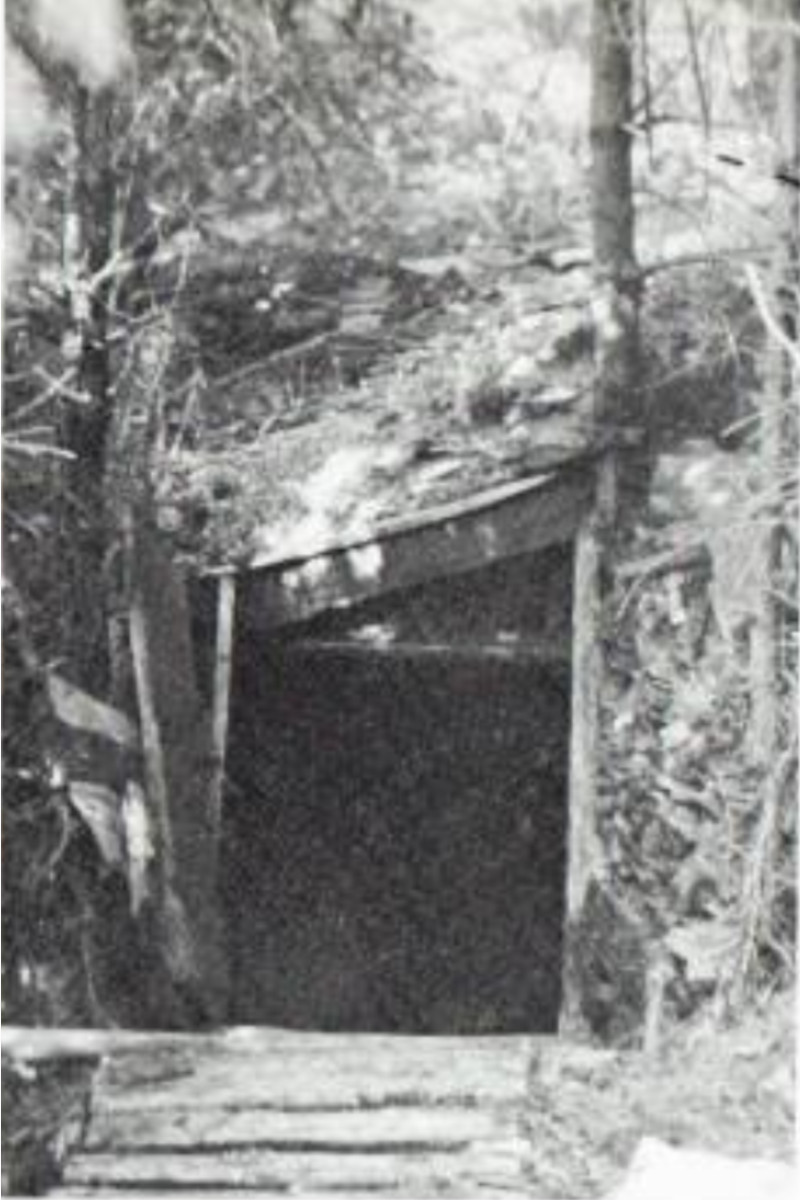
The entrance to the bunker in Drauffelt, which was camouflaged when someone was inside
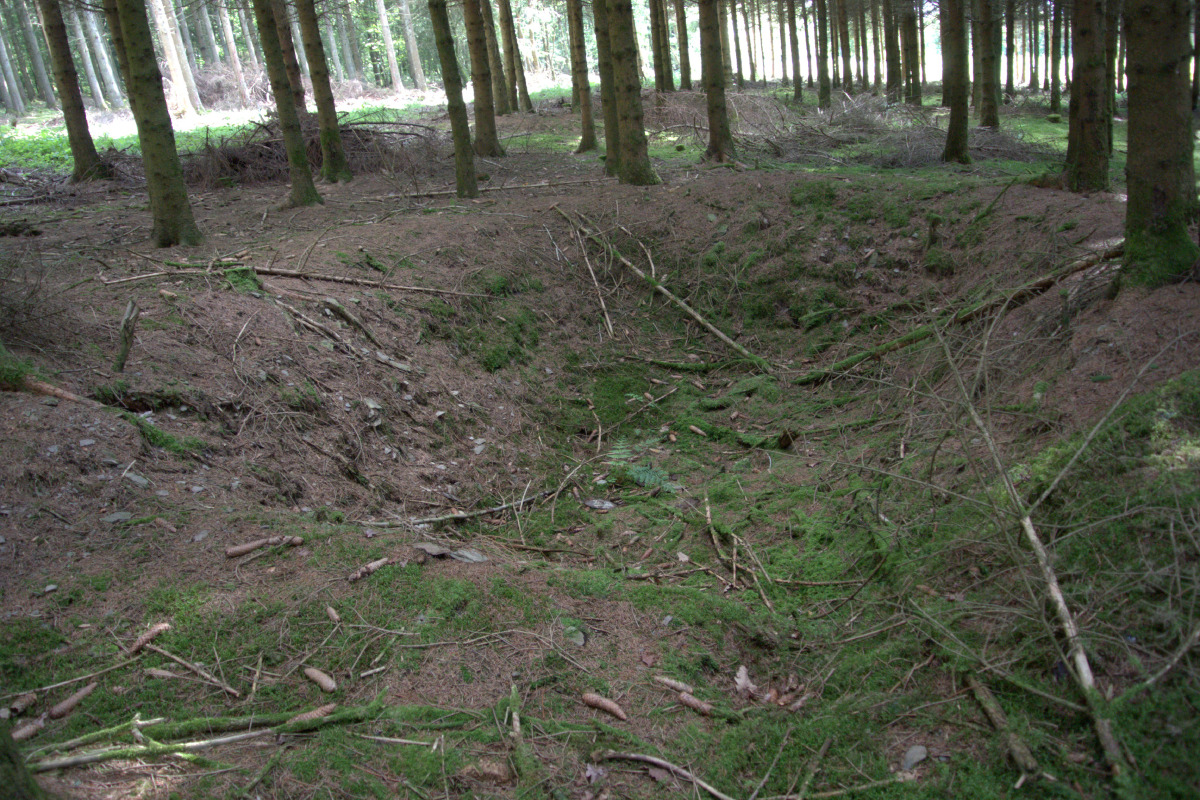
A bunker was located in this wood at “Wesserwee” near Enscherange. Only a few traces remain of the terrible events that once took place here. On visiting the remains of his shelter, a former occupant told his story of fear and persecution with tears in his eyes
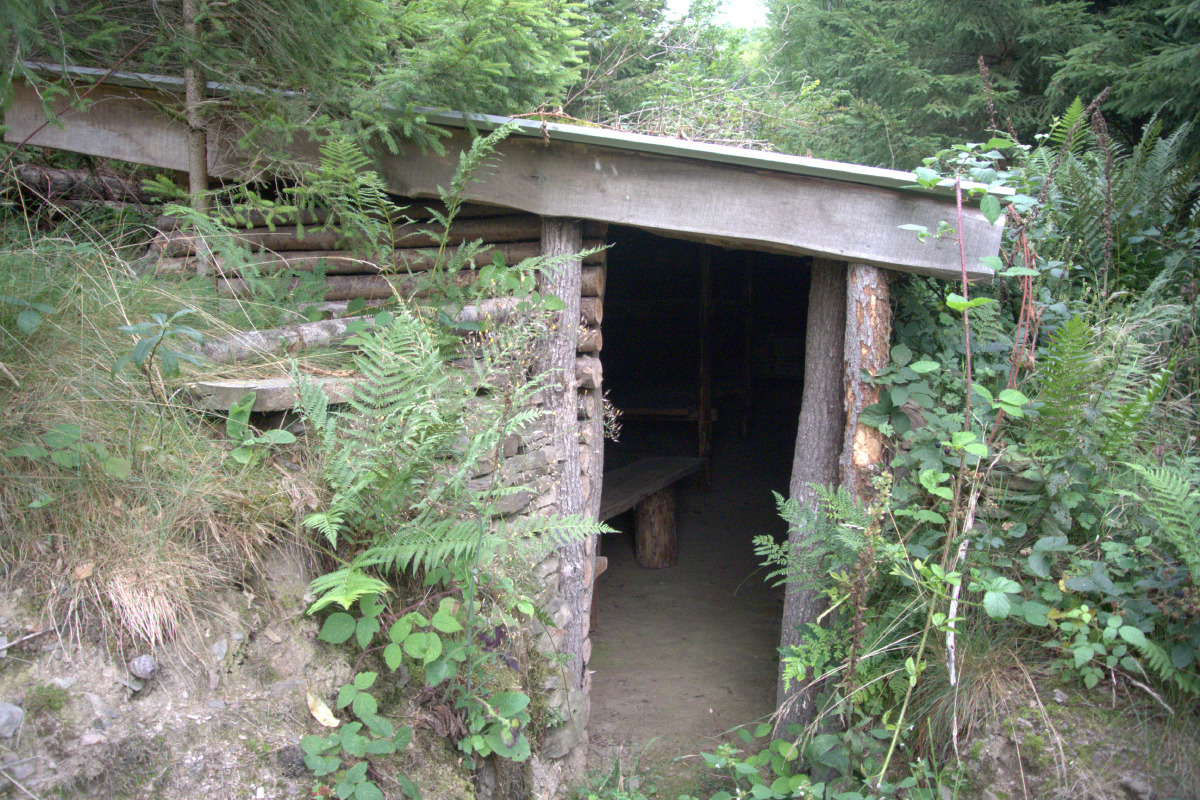
The bunker trail leads to the Fridbësch bunker
Further information
Sources & photos
› Jean Milmeister - Die Ardennenschlacht
› Fritz Rasqué - Das Ösling im Krieg
› Joseph Mäertz - Luxemburg in der Ardennenoffensive
› Aimé Knepper - Les réfractaires dans les bunkers
› Jean-Marie Boumans – photos
› Website Visit Eislek


